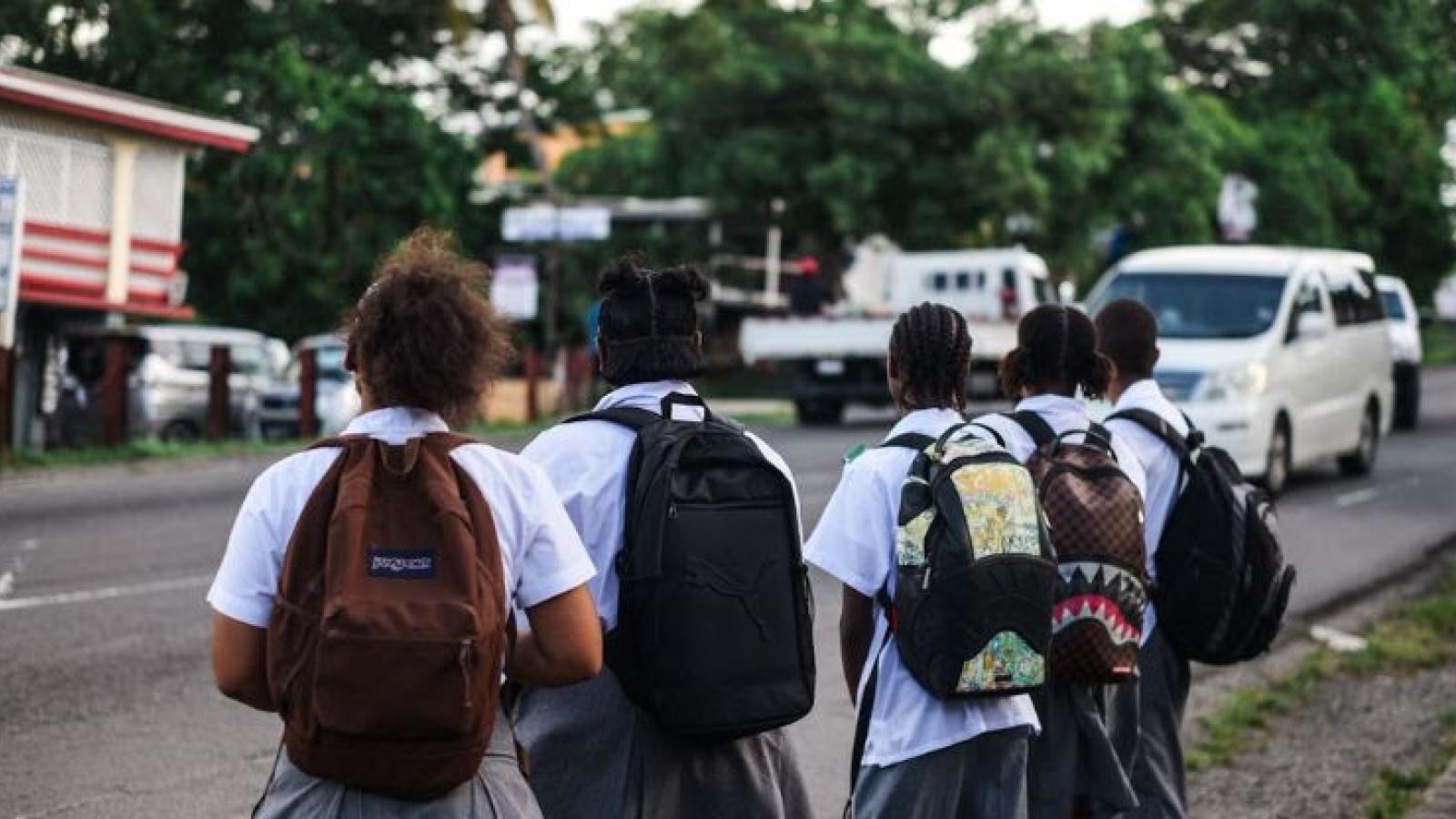
Across the Caribbean, governments speak often of the orange, green, blue or even purple economies. Each vision promises transformation — from sustainable energy to digital creativity. Yet these promises rest on a fragile foundation. Without an education system capable of equipping citizens with the tools to navigate a rapidly shifting world, no strategy will endure.
For too long, education has been treated as a mirror of who we are. That approach is not only nostalgic but prescriptive. It risks trapping the curriculum in past identities instead of preparing citizens for future realities. Education must instead be understood as a shared baseline of orientation — a foundation that allows people to interpret, choose, and act in the face of global complexity.
The metaphor is simple. Imagine if driving schools taught contradictory rules: to one student, a red light means stop, while to another, it means go. The roads would be filled with accidents and confusion. This is the danger of fragmented education. In a world shaped by globalisation, technological disruption, and climate pressure, citizens need common points of reference. Without them, collective decision-making falters.
This is not an argument for control but for empowerment. A curriculum rooted in abundance and creative potential can give young people more tools to choose well — to act with more awareness in their communities, economies and democracies. Informal education through music, family and community has long filled gaps left by the state. But today, those gaps are too wide to be left unattended. A deliberate rethinking of formal education is urgently required.
The task is broad. History must move beyond colonial timelines to include indigenous heritage, migration stories, and the global forces that continue to shape the region. Geography and culture must be taught as interconnected — linking Caribbean ecosystems to global climate politics or local music traditions to global cultural industries. Language matters, too, especially in the words chosen to describe people and places, shape how children imagine themselves in the world. As UNESCO has argued: “Curricula need to be reimagined to value diversity of knowledge, including indigenous knowledge systems, and to cultivate critical thinking, creativity and cooperation.”
This is also an economic necessity. The Revised Treaty of Chaguaramas commits CARICOM states to the free movement of skilled professionals and services under the Single Market & Economy. That vision cannot succeed if citizens lack comparable qualifications, competencies, and awareness of regional standards. Without shared grounding, initiatives like the CSME risk stalling, as citizens remain unequipped to navigate rights, responsibilities, and opportunities across borders.
The alternative is costly. Migration pressures will grow if education fails to prepare young people for local opportunity. Inequality will deepen if only the elite gain access to relevant, future-facing skills. And democratic trust will erode if citizens cannot place contemporary debates — about sovereignty, climate, or technology — in a shared context.
Reform will not be simple. It requires political courage, public consultation and long-term investment. But the prize is significant. An education system that serves as a baseline rather than a mirror can anchor the Caribbean in the storms of global change. It can give citizens the capacity not only to interpret the world, but to shape it — together.
Culture will continue to inspire, music will continue to teach, and families will continue to pass on wisdom. But the state must no longer rely on these informal channels to carry the weight of national orientation. That responsibility belongs in the curriculum, and it belongs there now.
If sovereignty is to mean anything today, it must include sovereignty over knowledge. Education is not about nostalgia. It is about equipping citizens with the clarity and context to choose wisely. In a fragmented world, that shared baseline could yet be the Caribbean’s greatest strength.
- Se connecter ou s'inscrire pour publier un commentaire
- 92 vues

18/10/2026 - 20:03
16/10/2026 - 11:14
Christian Ursulet
08/10/2026 - 12:57
06/10/2026 - 11:15

de Johnny Hajjar
04/10/2026 - 19:38