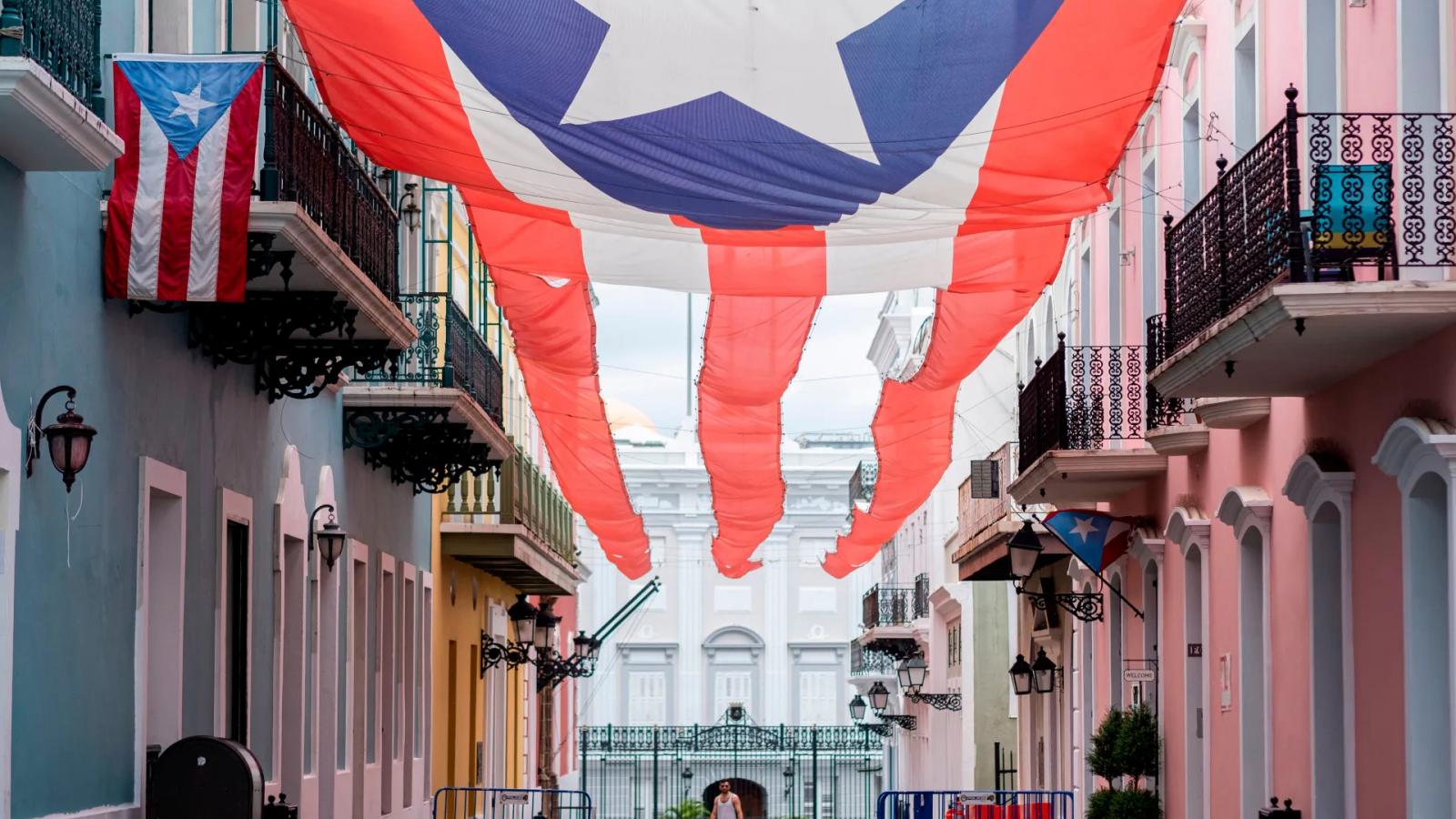
The House passed a bill this Thursday that would allow Puerto Ricans to vote in the first-ever binding referendum to either join the U.S. as the 51st state, or gain independence.
Coined the Puerto Rico Status Act, the bill is not favored to pass in the Senate, but symbolizes progress toward the island territory’s long-sought dream of achieving more political autonomy. The measure was backed by the White House and passed with a bipartisan vote of 233 to 191, with 16 Republicans joining 217 Democrats in approval.
The House made a similar initiative more than 10 years ago, but this time it includes a requirement that the federal government honors the results of a referendum, whatever they may be.
“For far too long, the residents of Puerto Rico—over 3 million U.S. citizens—have been deprived of the opportunity to determine their own political future and have not received the full rights and benefits of their citizenship because they reside in a U.S. territory,” Rep. Raúl Grijalva (D-AZ) and the bill’s 63 co-sponsors wrote. “H.R. 8393 [The Puerto Rico Status Act] would take a historic step towards righting this wrong by establishing a process to ascertain the will of the voters of Puerto Rico.”
Over the years, Puerto Rico has held seven referendums to gauge what type of political future its population wants, but none of them were binding and typically faced low voter turnout. In a 2020 referendum, 53% of Puerto Ricans voted for the island to become a state.
The Puerto Rico Status Act would include three options for voters to choose between at a referendum. The choices are to grant Puerto Rico statehood, to grant it independence or to grant it independence while retaining some U.S. affiliations. The bill also covers some procedures for how the changes could be implemented and designates resources for a voter education campaign.
The Puerto Rico Status Act would need at least 60 votes to break a Senate filibuster, which analysts are highly skeptical will occur. With Republicans poised to take control of the House in January, the measure appears to be a last-ditch effort to pursue Puerto Rican independence or statehood. The GOP generally doesn’t vie for Puerto Rican statehood, likely because of how the move might add more Democrat voters to the national electorate.
Following its colonization under Spain in the early 16th century, Puerto Rico became an American territory in 1898. The island has over three million inhabitants today. Puerto Ricans were granted American citizenship in 1917, but still lack representation in Congress and cannot vote in presidential elections.
Puerto Ricans also face restrictions for eligibility in some federal programs and typically don’t pay federal income taxes, but they can serve in the U.S. military and are subject to the draft. About 40% of Puerto Ricans live at or below the poverty line.
“Time’s up on pondering the political and economic consequences of Puerto Rican statehood, let alone being opposed to it,” Christina Ponsa-Krau, a Columbia law professor who specializes in American territorial expansion, wrote in an essay for the New York Times. “You don’t annex a place, make it your colony for nearly a century and a quarter, and then reject its people’s vote for statehood.”
- Se connecter ou s'inscrire pour publier un commentaire
- 649 vues
13/08/2026 - 12:07
Dieudonné St-Cyr ("o-news1ere.com")
01/08/2026 - 17:05

23/07/2026 - 20:42

03/07/2026 - 18:48